
Curiosity, Judgment, and Empathy: What AI Can’t Replace
By Donald Swartz, President and Noelle Giacomino, Director at Indurante & Associates
Intro from Don
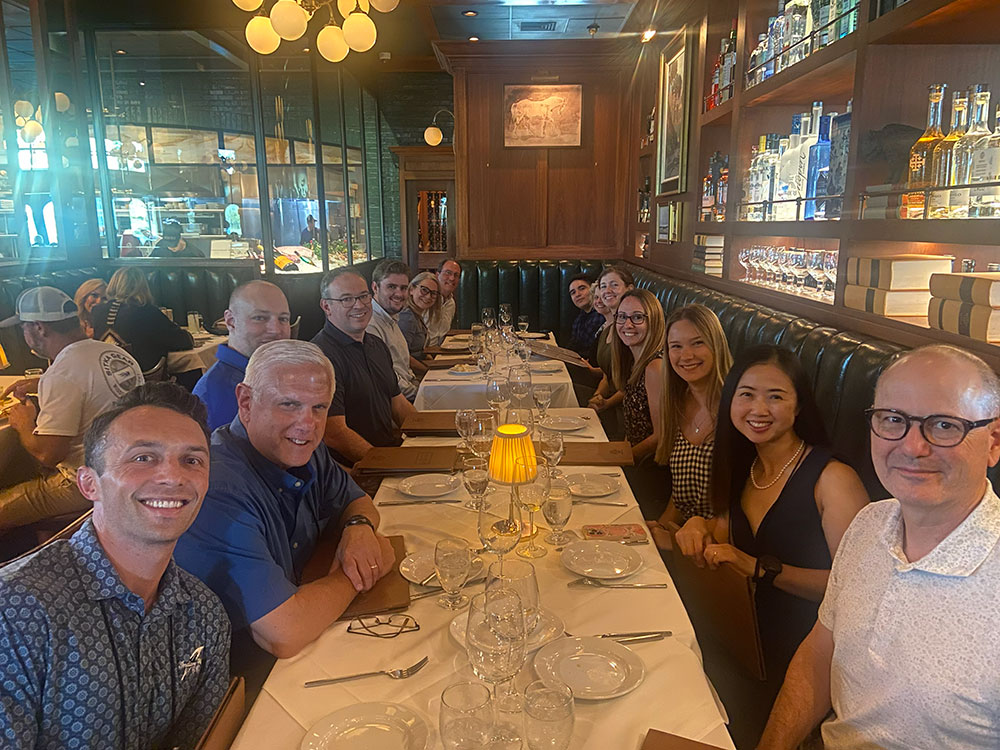
In July, I attended the 54th annual Property Tax Conference in Wichita, KS. This is a “must attend” conference for Indurante & Associates. We meet with several assessors from various states and Departments of Revenue as well as clients/owners of private rail cars.
Since acquiring Indurante almost 8 years ago, I haven’t missed this conference (except for 2019) and the value it provides on a professional and social level continues to be valuable to Indurante. Noelle Giacomino was attending as well. We were talking about the event and her perspective, I thought her story was worth sharing, specifically how it relates to the trend of people adopting AI tools in their businesses.
Thoughts from Noelle
 Several weeks ago, I traded the dry Las Vegas heat for Kansas humidity to attend the annual Wichita State Property Tax Conference.
The conference brings together property tax professionals from government agencies and the private sector, offering plenty of opportunities to:
- Connect with colleagues from across the industry
- Learn from informative educational sessions
- Hear speakers explore current political and economic events, and what they mean for our field
For me, the daily keynote speakers are always a conference highlight. This year’s closing keynote featured Craig Karges, an entertainer, author, and nationally recognized speaker who blended magic, psychology, and intuition in ways that captivated the crowd. During his presentation, he also shared memory techniques designed to tap into the subconscious, spark creativity, and strengthen decision-making. Most importantly, Craig reminded the conference-goers that the human brain remains our most powerful tool.
Human Brains and AI in the Workplace
 After watching Craig lift and move a table across the stage using only the tip of his finger, I left the session thinking about the power of the human mind in today’s artificial intelligence (AI) driven world. His presentation raised a question for me: How can I keep challenging myself and grow as a learner when AI is so accessible and makes many aspects of daily life easier?
I’m not sure there’s a straightforward answer to that question. However, I can accept that AI is here to stay and make a conscious effort to use it intentionally. Deciding when and how to use AI pushes me outside my comfort zone and encourages me to think critically about everyday tasks it can make more efficient.
Take this blog post, for example, AI helped me revise and edit it.
Writing doesn’t always come easily to me, and even with AI’s help, this post took longer to complete than I’d like to admit, but it would have taken much longer without it. In this case, AI freed up time for other pressing matters like responding to client emails.
Ultimately, AI is a tool, and using it well still depends on the human mind.
When we use AI thoughtfully, it can free up time for the work and activities that keep us engaged and help us grow. The goal isn’t to choose between human and artificial intelligence, but to use AI with intention while preserving curiosity, judgment, and empathy – qualities that remain uniquely human.


Leave a Reply
Want to join the discussion?Feel free to contribute!